

Delights from March
from stories, to strategy, to street trees: reflections from last month

We made it to Spring y’all! 🌼
On March 20th, at 10:46 a.m. (EST) the Sun crossed over Earth’s equator, marking the official astronomical start of Spring.
This moment is what’s known as the Vernal, or Spring Equinox — when day and night are nearly equal in length, each lasting about 12 hours1. It signifies the coming of longer days (more sunlight!) and the gradual reawakening of the natural world.
For centuries, events like this marked the beginning of a new year, back when our perception of ‘time’ was something we lived alongside, influenced by the rhythms of nature rather than the way empires and religious institutions later defined it.
So yes, happy spring! But happy new year, as well!
Below are the things that defined my March — media, and experiences I thoroughly enjoyed and brought me a bit of delight. And of course, in true fashion, the deeper reflections each of them prompted.
Enjoy,
xx
Delight No. 1 : Martyr! 🌼
✧ ✧ ✧
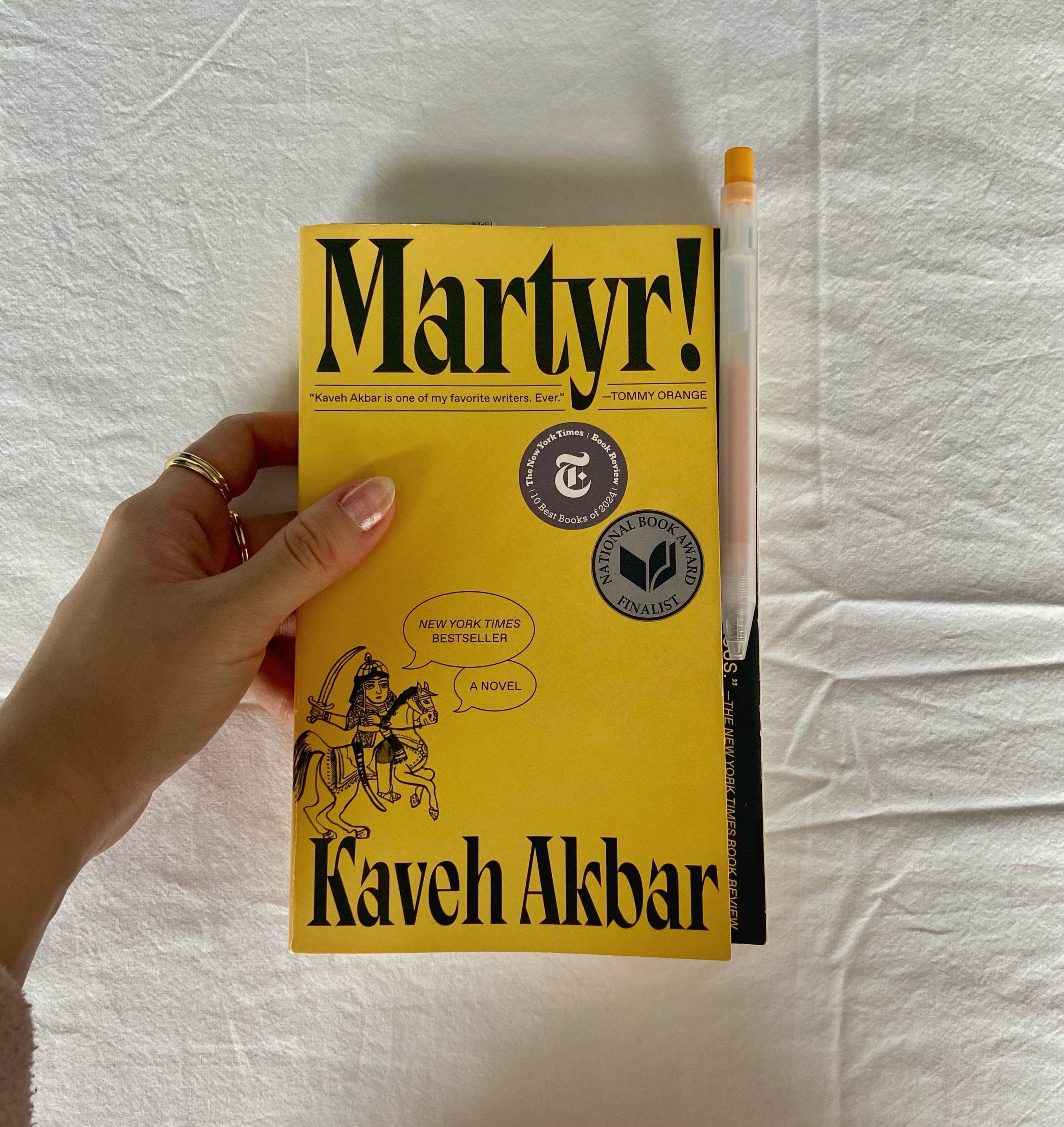
I was desperate for a fiction read towards the end of February — something that would take me out of my own head and into another world, away from the lingering, depresso winter themes I’ve been working through.
In March, I bought and finished Martyr! by Kaveh Akbar.
I forget where I initially ran into this book. I believe it may have been on someone’s TikTok, or browsing the Barnes & Noble website. Immediately though, I was drawn to the title, and then after a quick skim of the synopsis, I was sold:
“A newly sober, orphaned son of Iranian immigrants guided by the voices of artists, poets, and kings embarks on a remarkable search for a family secret”. Instantly intrigued.
Having now finished it, I can say its summaries don’t quite capture how special of a book this is. It’s written and structured so beautifully and creatively, my copy is filled with little hearts, asteriks, post-its, and exclamation points next to concepts I thought were explored brilliantly and curiously, sentences I found delicious, and scenes that made me pause in resonance or awe.
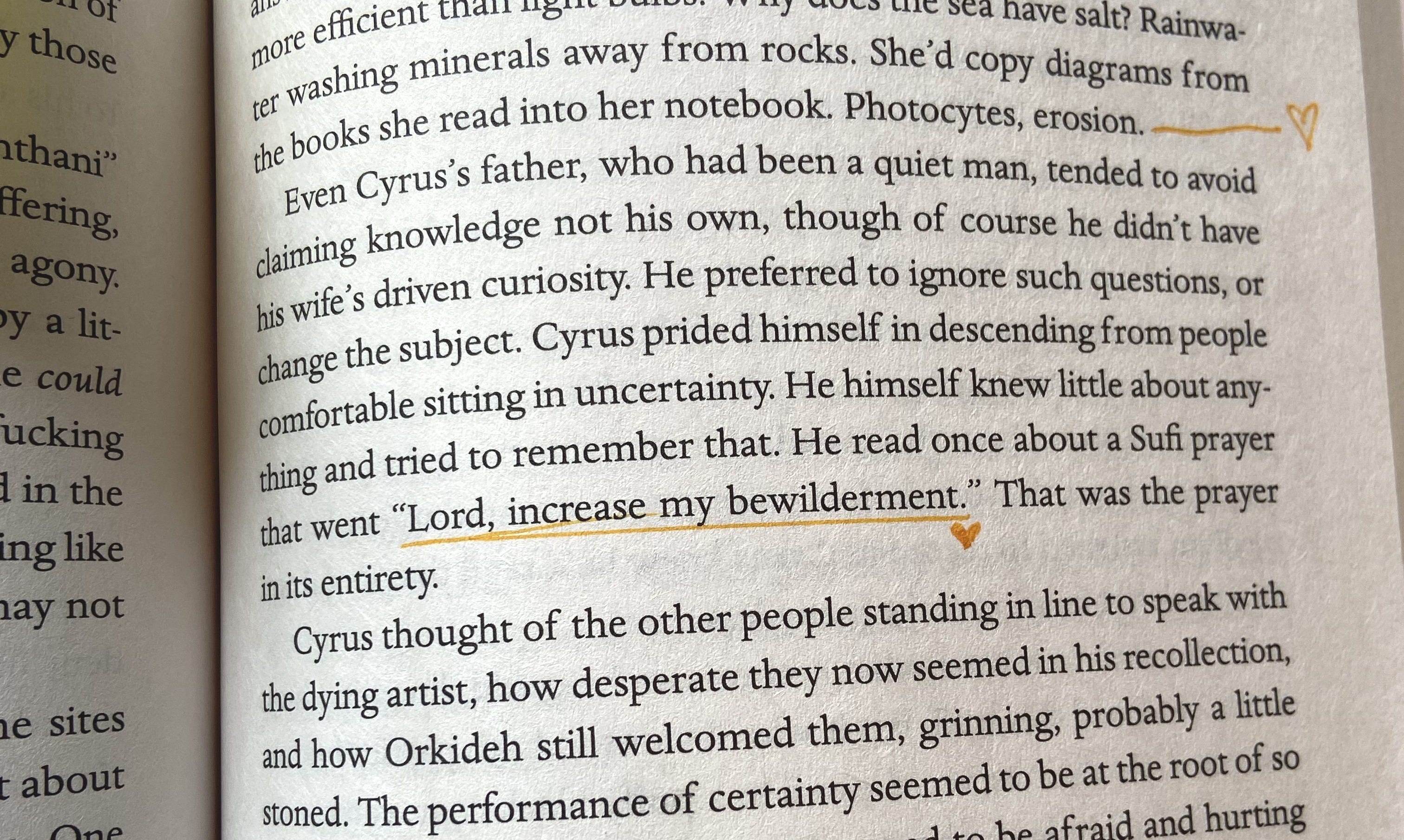
With that being said, I did experience some resistance to it at first.
Mainly because we meet the main protagonist, Cyrus, at a particularly heavy point in his life. He’s freshly sober, yet still drinking; working a job that pays his bills but is spiritually unfulfilling. He’s a writer, more specifically, a poet — who hasn’t been doing much writing much at all — and, I found myself questioning whether this was the kind of story I wanted to be reading whilst going through my own emotionally dense season.
But I stayed with it, and I’m glad that I did. It was undeniable through the way many of its scenes unfolded, that its writing was top-tier.
It was a few chapters in, I realized this book wasn’t anything I was expecting it to be. It was much more than that. The way that Kaveh Akbar told this story was imaginative and creatively inspiring.
The narrative switches from Cyrus’ perspective to those within his orbit (and at times, his imagination 💭 ) yet it never feels disjointed. While reading, I never once felt reader’s fatigue. Each chapter, each section, adds a new layer, addressing and exploring martyrdom, self-discovery, purpose, culture, identity, and the quiet complexities of our relationships with others and ourselves.
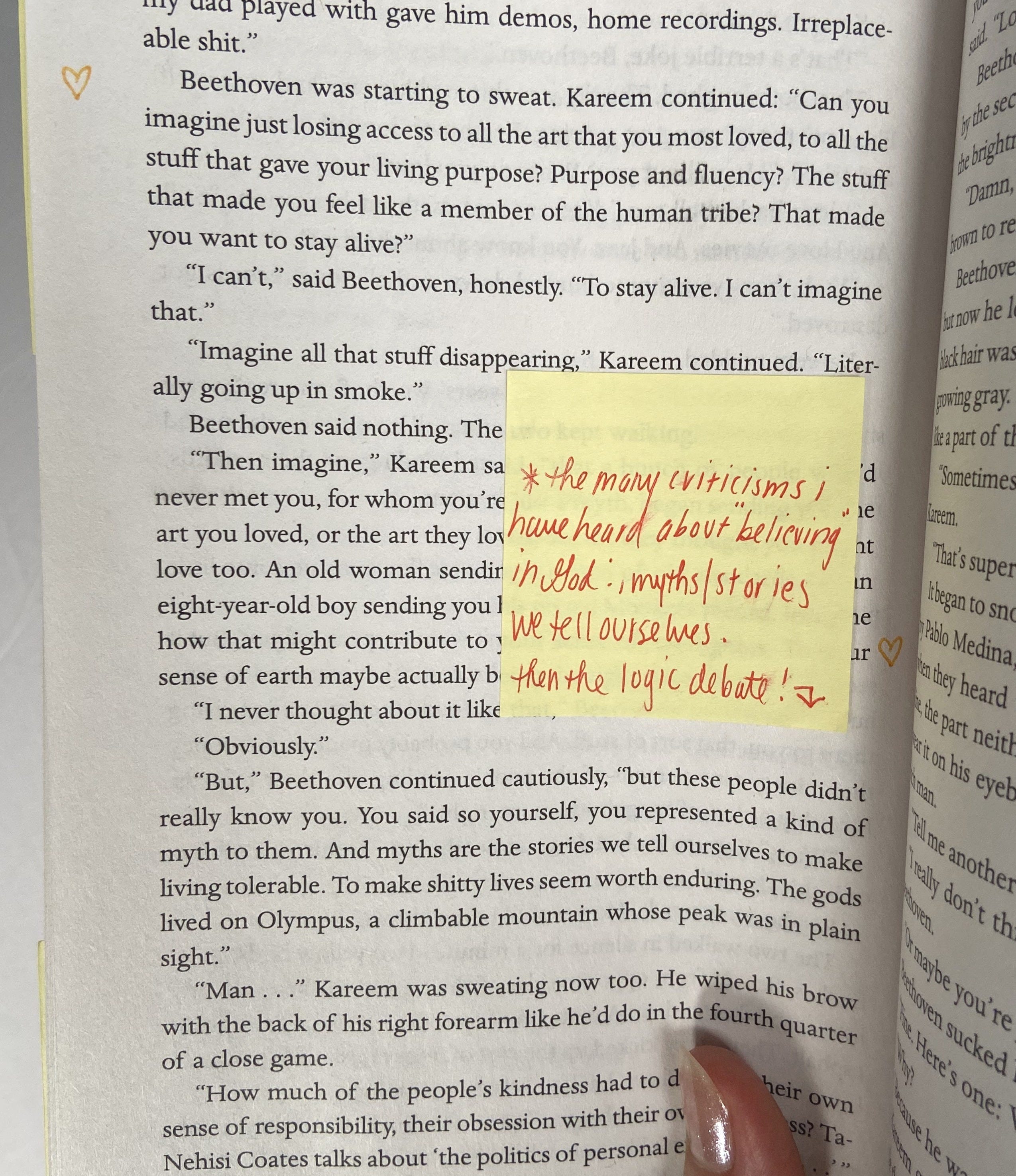
As we all know, I love to read. I do it for three simple reasons: to learn or deepen my understanding of something, to be entertained (mostly in the inspired sense), and to have something to engage with intellectually and philosophically. That, to me, is what makes me feel alive. The ability to ponder, to think deeply, is something I’ve come to realize is foundational to who I am, and reading provides me with an outlet to exercise that.
It’s from these pillars that I tend to measure whether a book is for me or just simply, isn’t. That varies a little, depending on the genre, but the principles pretty much stay the same . . .
Martyr! checked each of those boxes, and at times, exceeded them. Like, when Cyrus ruminates on the subjectivity of gratitude. He questions whether it is, in some ways, classist. He wonders if even having the time and space to consider gratitude is itself a kind of privilege.
I closed the book, and journaled what I thought about the matter. It’s something I’ve considered before, but the way it was presented made me wonder about it all over again. It made me think about the geographical lottery of it all, as he himself suggests. How, where we’re born shapes nearly everything. Our habits, our ways of expressing ourselves, even our perceived capacity for gratitude.
There were other moments that stopped me in a similar way. Two, in particular, came from the perspective of Cyrus’s uncle. His reflections on masculinity, both personal and cultural, and the emotional constraints tied to it were beautifully rendered. I really enjoyed the way each of these scenes were accompanied by his inner dialogue, adding depth not only to him but others in the scenes as well.
And then of course, I cannot conclude my praise of this book without acknowledging its cultural depth.
Written by an Iranian author and centered on Iranian characters, the story moved between Tehran and the United States. It explored the nuances of immigrant culture, the experiences of first-gen young adults, and the lasting shadow of Iranian history and its figures. Along the way, it also reflected on what it means to be shaped by one country’s past while living in another — one that has so often misunderstood or been in conflict with it.
This barely scratches the surface of what I loved from this book, such as the way it explores relationships, sexuality, and love. But I think those are best left for you to uncover as the reader. It’s the kind of story that reveals itself slowly, and I think it’s most powerful when experienced that way. Just know, it is beautiful.
Delight No. 2 : Professor Jiang 🌼
✧ ✧ ✧
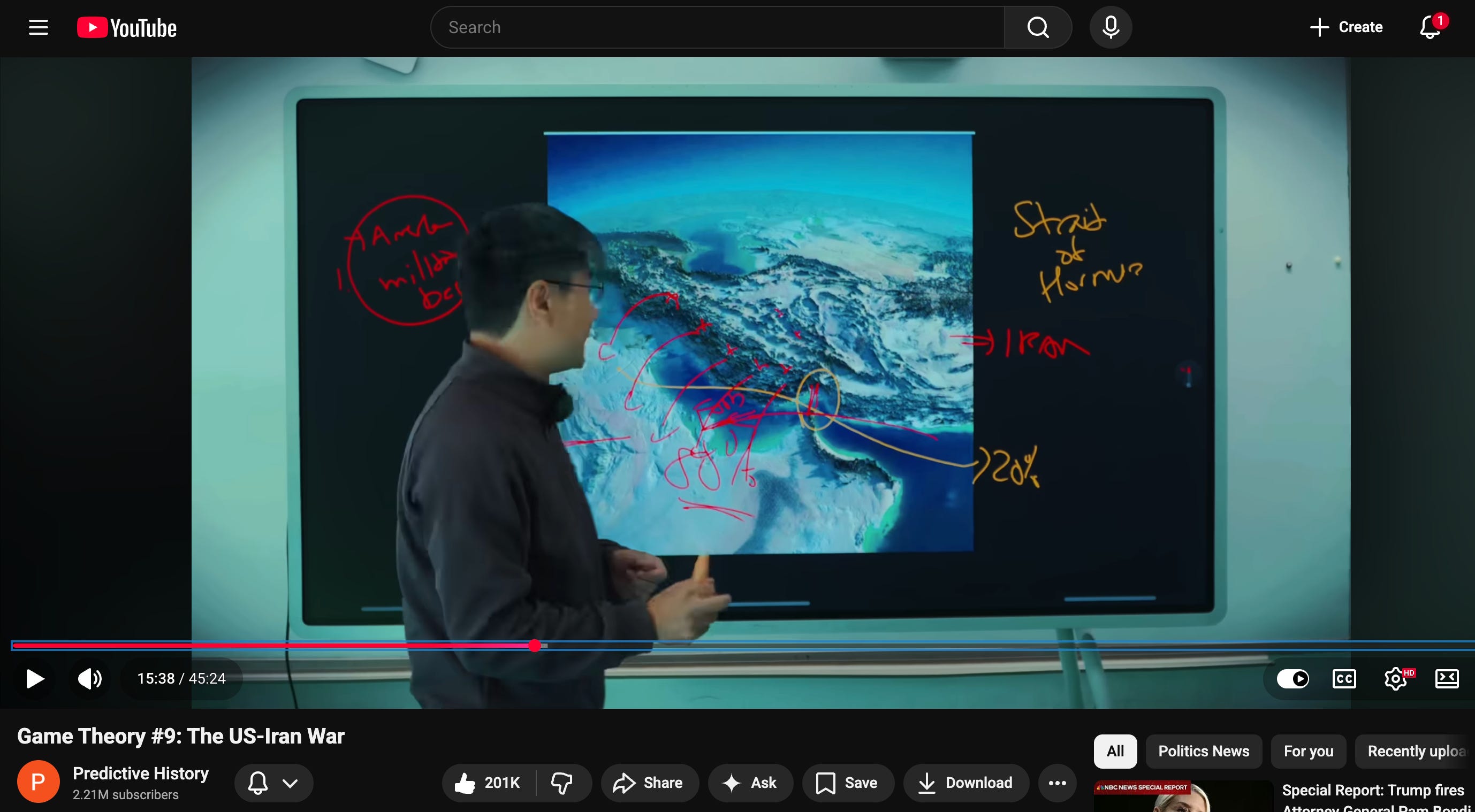
Just when it felt like we might get a SECOND of reprieve from the actions (and inactions) of the current U.S. administration, we were pulled right back in when the president, in alignment with Israel, started a war with Iran.
(by bypassing Congress and the Constitution might I add, and without really offering a clear explanation as to why).
We’re told it’s about the usual concerns — nuclear weapons, security threats— but the actions and patterns of both the U.S. and Israel suggest otherwise.
Such as the recent events pertaining to oil in Venezuela, the timing of these strikes happening under increased public pressure on the Epstein files, and of course, Israel’s long-standing patterns of conduct that continue to draw scrutiny and criticism across the globe.
What’s unfolded this March between the United States, Israel, Iran, and Lebanon is heavy. Its unsettling and stark. And so, in frustration about a war no one asked for, I tuned in for a lecture by Professor Jiang.
If you’re not already subscribed to his YouTube channel, Predictive History, I can’t recommend it enough. He uploads full-length, college-style lectures on topics ranging from geopolitics to philosophy to religion, and they’re some of my favorite pieces of content online.
Above, is a screenshot from the lecture I watched, where he uses game theory to explain the U.S. and Iran conflict.
Game theory meaning, he explains the strategy, the motives of each party, their pros and cons, as well as their long-term positioning, rather than just reacting to surface-level events.
He explains the Strait of Hormuz, how vital this narrow, 33 km waterway is — in which 20% of the world’s oil flows through. The importance of this area being a vulnerability, not just for the U.S. or Iran, but the entire globe. For instance, 60% of India’s oil, comes through the Strait of Hormuz… Japan 75%. Food also moves through, and many GCC countries (such as Bahrain, Qatar, the U.A.E, etc.) heavily rely on imported food, and roughly 80% of it travels through the strait.
In response to strikes from Israel and the United States, Iran has closed it.
Speaking of vulnerabilities, I found his explanation of American “empire” tropes at play in this conflict, interesting. How many of the U.S.’s tactics have relied on signaling and flexing power, but not necessarily in ways that are adaptive or innovative. Clearly seen in the way many U.S. military bases in the region aren’t really about protecting the nations they’re in, but about maintaining presence and influence. It’s even performative at times, costly, visible, and not always as strategic as it appears on the surface.
Iran began striking these U.S. bases across “the Middle East” (SWANA), because as Professor Jiang puts it, you destroy the bases, you destabilize the GCC, and therefore, you destroy the American Empire.
He also discussed vulnerabilities on Iran’s side. How the country’s mountainous terrain is both a pro, and possible con. On one hand, it allows for strong defensive positioning and concealment. On the other, it can make certain regions more difficult to access or reinforce if they come under attack.
He also touched on Iran’s water scarcity, not as severe as other GCC countries like the UAE or Saudi Arabia — but still a meaningful factor to consider. Over time, things like this can shape long-term strategy in ways that aren’t always immediately visible.
Below, I’ve included a link to another trusted source, that addresses similar points to those explained by Professor Jiang above:
(Another great resource breaking down some of the early conflict)
These reasons, and many more, are why I wanted to feature his channel this month. Because while living through so many historical events, and staying updated on them can be overwhelming — his lectures make it inexcusable to remain informed.
He doesn’t sensationalize, or overcomplicate the subjects he discusses, he just lays things out in a way that invites you to think a little deeper, by merely presenting the facts in an unbiased way. The ethos of his channel is the following:
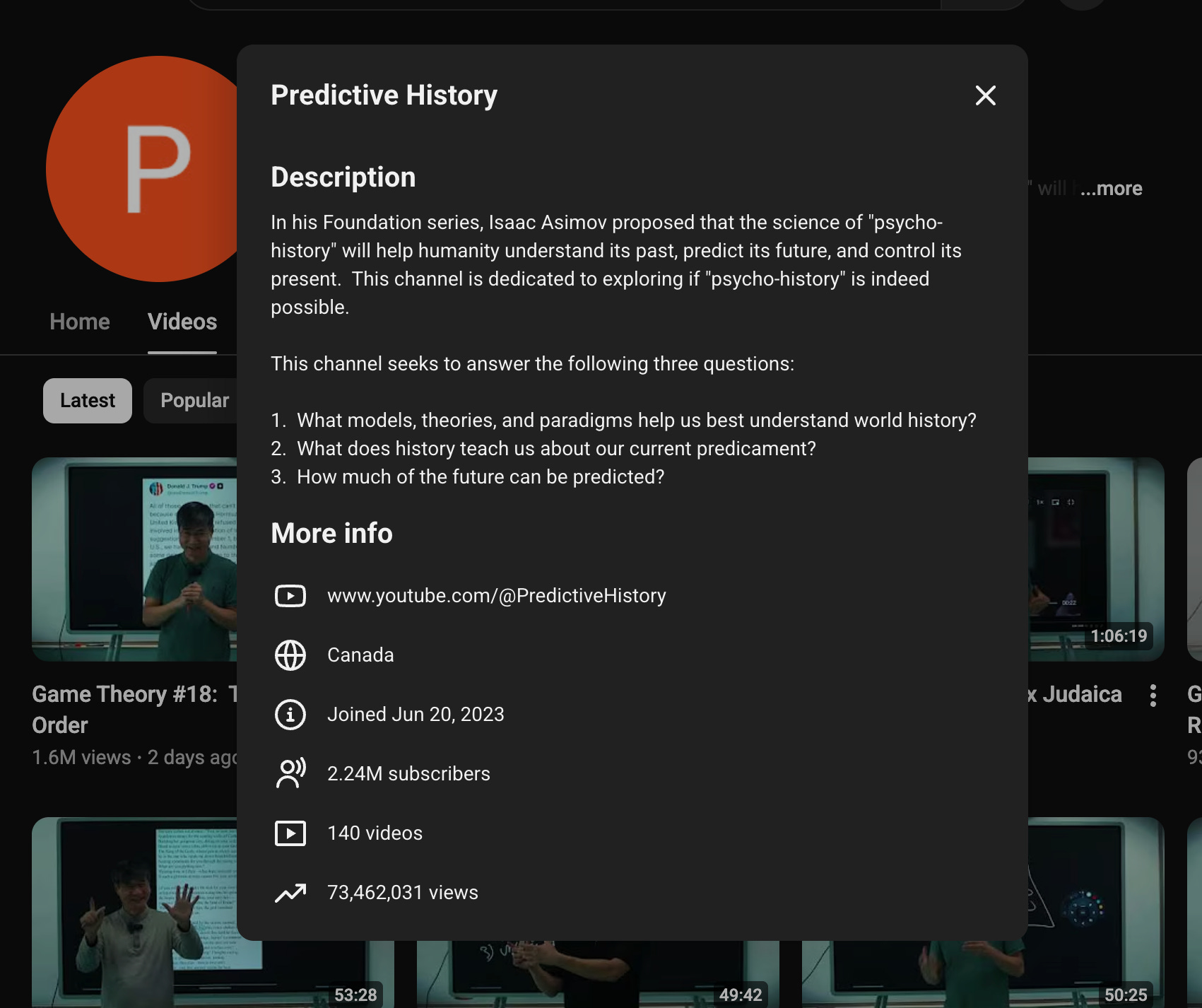
Which is a brilliant lens to not only look at current events, but empower ourselves. The more we know and understand about our past, the more we can make sense of and address the events of our present — a belief I understood and share myself, echoed by Isaac Asimov, and Professor Jiang.
Delight No. 3 : I became a Care Captain 🌼
✧ ✧ ✧

Living in New York City’s boroughs means forming a bond with the small pockets of nature that our parks, green spaces, and street trees so generously give to us. Two years ago, my heart broke when three massive trees on my block were cut down.
To those who share a deep love and resonance with Mother Earth, I know you know the feeling. It affected me deeper than I expected — walking past the freshly cut stumps of trees hundreds of years old. I think it was a combination of many changes my block was going through, and this particular incident felt like the final straw.
While I recognize that it’s the responsibility of the city and property owners to address any concerns trees may pose to their properties and our public spaces, I wish more reverence were given to the care and maintenance of our street trees and the ecosystems they sustain. I’ve witnessed far too many tree funerals — often because cutting them down was simply considered the ‘easier’ option . . .
I trekked over to Long Island City on the first day of spring to pick up what you see above.
Last year, I discovered a program I hadn’t known existed: New York City Parks’ Super Steward initiative.
It’s a volunteer program that trains people to care for the city’s green spaces, street trees, and other natural areas. It sounded like the perfect outlet for someone still mourning the loss of her own block’s massive trees.
So I signed up for an event and ended up learning a lot — about soil compaction, root flare, and even the particular insects, rats, and diseases that affect trees. (Did you know rats can chew through anything softer than steel? Pouring concrete in a tree bed to deter them is pointless, you’re just cutting off nutrients and water while suffocating the tree 🙃…)
After completing an on-site volunteer event and attending online orientations, I was finally deemed ready to pick up my toolkit and start caring for street trees on my own.
Although I haven’t ventured out in my own neighborhood yet, I’m beyond excited to begin!
Of course, the trees still standing on my block will get first priority, and I hope that the stumps of the former giants will somehow bear witness to the care their memory has inspired.
Pausing this series for next month to work on other content, but will pick up as soon as I can! Until then angels!
“ The truth of life really has little to do with its quality.
The quality of life is in proportion, always, to the capacity for delight.
The capacity for delight is the gift of paying attention. ”
~ Julia Cameron
xx
🪶
Staff, Farmers’ Almanac. “Spring Equinox 2022: When Is It, and What Is It?” Farmers’ Almanac, www.farmersalmanac.com/spring-equinox-first-day-spring.